
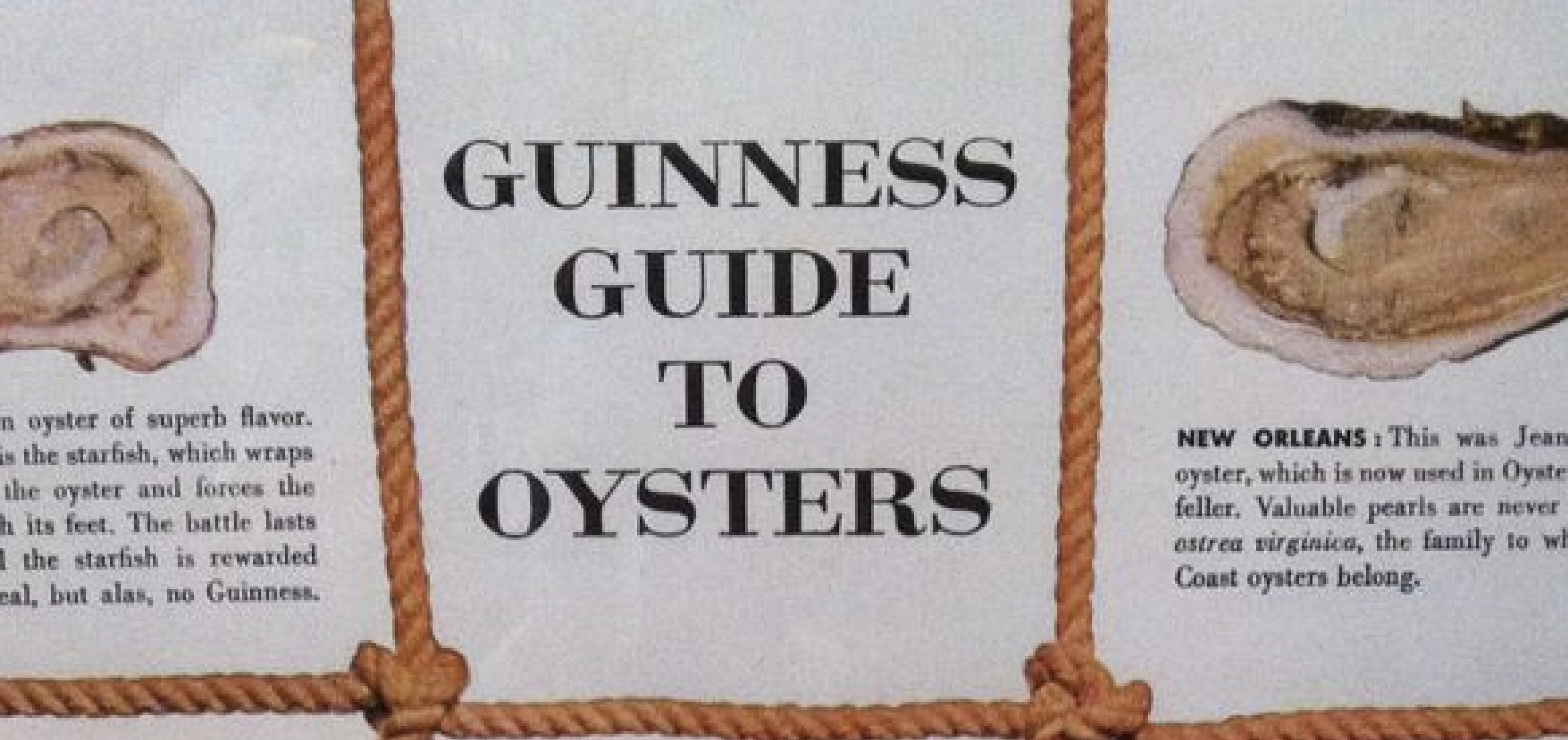
Recently, I was reading Ogilvy on Advertising and came across the “Guinness Guide to Oysters” print ad. For those who may not know, David Ogilvy is one of the most influential ad men of all time. He founded the agency Ogilvy & Mather, which continues today as Ogilvy. Apparently, the “Guinness Guide to Oysters” is the first ad published by that agency.

This ad stuck out to me. The text is rich, covering topics such as geography, biology, and history. Clearly, a lot of research went into this ad, and a lot of effort was put into compressing that research onto one page. Of course there are several references to Guinness, though they are not obnoxious.
Table of Contents
Ogilvy Guide to Content Marketing?
If you think about it, this ad is similar to modern content marketing. A healthy-sized chunk of text packed with useful and/or interesting information, with some product-centric messaging. You could easily imagine this being written as a blog today, though blog posts don’t tend to be shared in magazine ads.
However, the depth of research and information density is impressive. I have started paying close attention to information density—most blogs are weak on this score, stretching out a couple of simple points to an absurd length. This ad is leagues ahead of almost anything you see today, apart from the “nut graph” of news stories.
What is most striking about this ad is its difference from print ads today. I still read magazines (though admittedly not a wide variety), but I cannot remember seeing any ad with this much text outside of an advertorial.
Would an ad like this be effective today? I can imagine it working in B2B science marketing – “Company’s Guide to Yeast” or “Company’s Guide to Protecting Groups” sounds neat! Clearly, “Company’s Guide to XYZ” is trivially easy to repurpose for many topics.
Ogilvy had a similar idea. “Guinness Guide to Food” became a long-running campaign with many fascinating examples. Here are a few of my favorites:


Don’t Romanticize Old Ads
I avoid romanticizing old ads and marketing. There is a whole cottage industry over on LinkedIn of people waxing poetic about how great the ads were through the 1950s-1970s. While some are excellent, I think many of these ads suck (or at least they don’t appeal to readers 50+ years in the future).
However, we can learn lessons from older advertisements. They put a lot of effort into the writing, which shows in work like the “Guinness Guides.”
I wonder if Ogilvy would be a content marketer if he were alive today…
